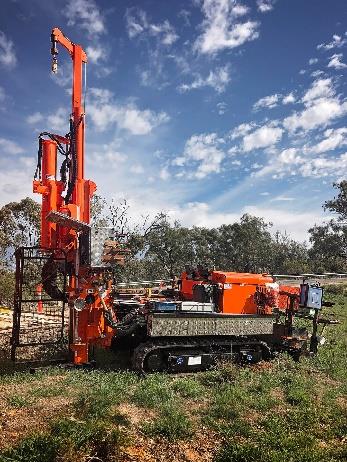
Cone Penetration Testing (CPT/CPTu)
Cone Penetration Testing pushes an instrumented cone into the ground at a steady rate of about 2 cm per second and records soil response continuously with depth. A standard cone has a 60-degree tip and a 10 cm² base area. Sensors measure tip resistance and sleeve friction, and in the piezocone (CPTu) version also the pore-water pressure. The cone is pushed hydraulically from a heavy truck, track unit or ballasted rig, which provides the reaction force, following ASTM D5778 or ISO 22476-1. No sample is taken, but the detailed profile is used to identify soil layers and estimate strength, density, stiffness and liquefaction potential for foundation and earthworks design.
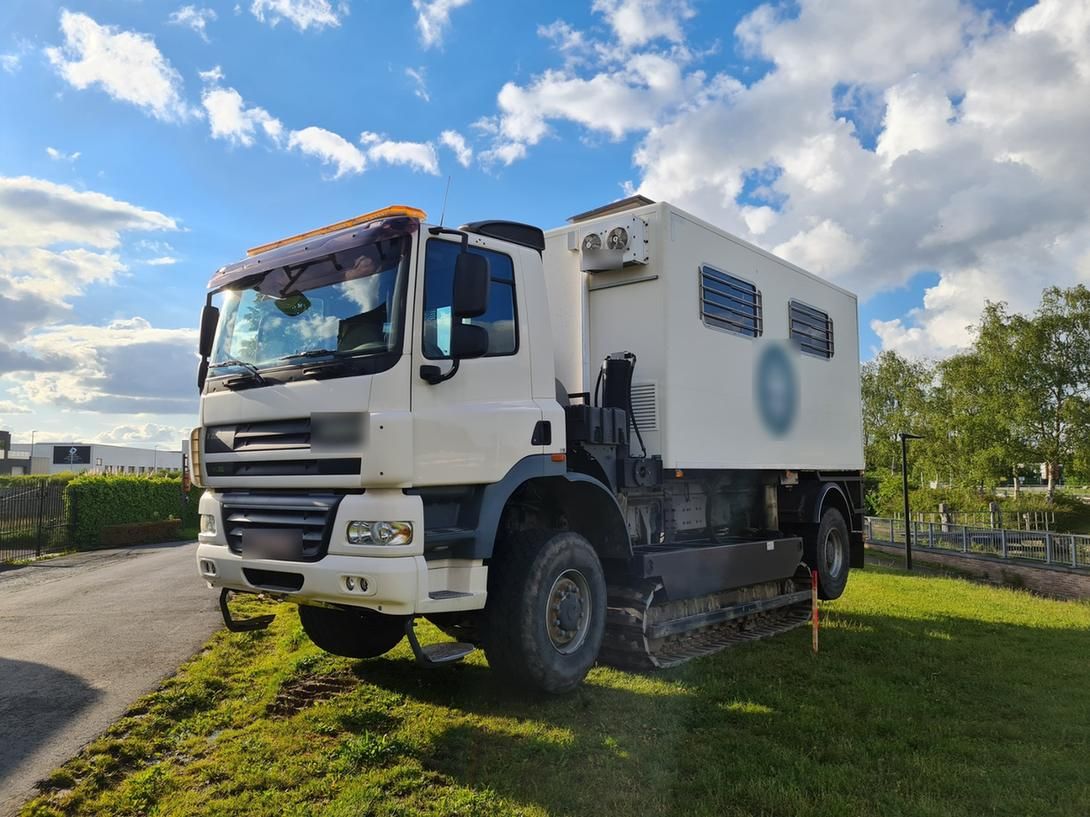
Standard Penetration Test (SPT)
The Standard Penetration Test is the most widely used in-situ test in borehole investigations. A split-spoon sampler on drill rods is driven into the soil at the base of the borehole by a 63.5 kg hammer falling freely through 760 mm, usually released by an automatic trip mechanism. The sampler is driven 450 mm in three 150 mm increments, and the number of blows for the last 300 mm is recorded as the SPT N-value, following ASTM D1586 or ISO 22476-3. After correcting for hammer energy and depth, N-values are correlated with the relative density of sands, the consistency of clays, bearing capacity, settlement and liquefaction resistance.
Pressuremeter Testing
Pressuremeter testing measures the deformation and strength of soil or weak rock directly in the borehole wall. A cylindrical probe with an inflatable flexible membrane is lowered to the test depth, either into a carefully drilled pocket (Ménard type, ASTM D4719) or by self-boring to minimise disturbance. The membrane is then expanded in controlled steps of pressure or volume, and the radial expansion is recorded. The resulting pressure-expansion curve gives the pressuremeter modulus, limit pressure and, for some probes, in-situ horizontal stress. These parameters are used in the design of shallow and deep foundations, laterally loaded piles and retaining structures, especially in ground that is difficult to sample.
Plate Load Testing
A plate load test measures how the ground beneath a footing or pavement settles under load. A rigid circular steel plate, typically 300 to 760 mm in diameter, is bedded on the prepared test surface at foundation or formation level. A hydraulic jack between the plate and a reaction, such as a loaded truck, excavator or kentledge, applies load in increments. Settlement is measured with dial gauges or displacement transducers mounted on an independent reference beam. Tests generally follow BS 1377-9, DIN 18134 or ASTM D1196 for pavements. The load-settlement curve gives bearing capacity, modulus of subgrade reaction and deformation modulus, which are used to verify foundation, slab and compacted-fill design.
Vane Shear Testing
The vane shear test measures the undrained shear strength of soft, saturated clays in place. A vane with four thin, rectangular blades in a cross shape is pushed into undisturbed clay, either at the bottom of a borehole or directly from the surface. It is then rotated slowly, typically at about 6 to 12 degrees per minute, while the torque is recorded. The peak torque gives the undisturbed shear strength. Further rapid rotation remoulds the soil, so the test also gives remoulded strength and sensitivity. Field procedures follow ASTM D2573, and small hand vanes are used for quick checks. Results are used for embankment, excavation and slope stability design on soft ground.
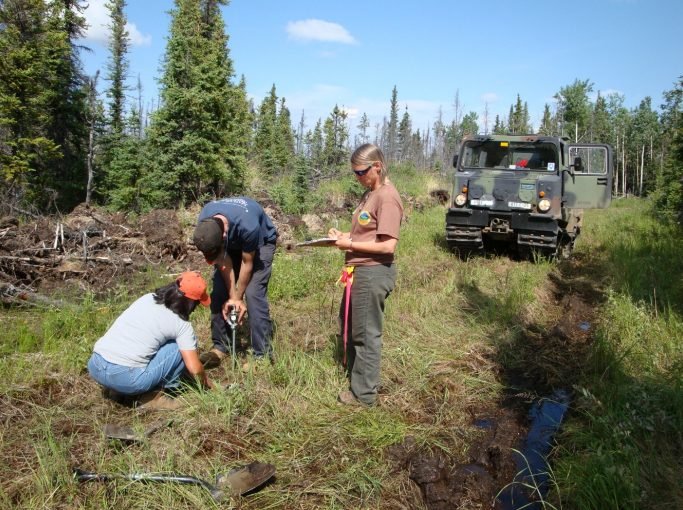
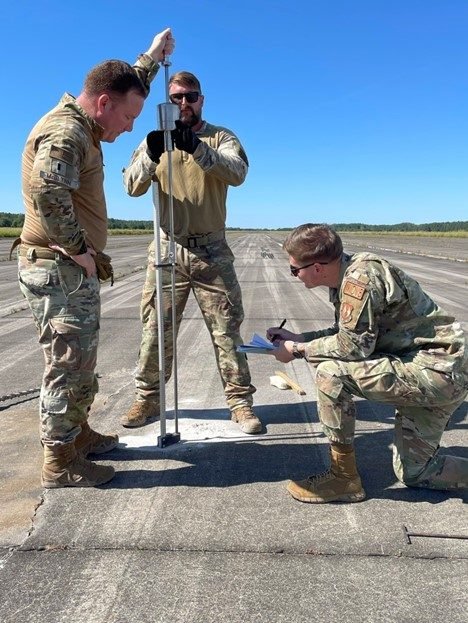
Dynamic Cone Penetration Test (DCPT)
The Dynamic Cone Penetration Test is a quick, portable way to assess the strength of near-surface soils and pavement layers. The common hand-operated device has a steel rod with a 60-degree cone tip and an 8 kg hammer that is lifted and dropped through 575 mm onto an anvil, following ASTM D6951. The operator records penetration per blow down to a depth of about one metre, and further with rod extensions. The penetration rate is correlated with California Bearing Ratio (CBR) and allowable bearing pressure. Engineers use DCP tests to check subgrade and compacted fill, assess road and airfield layers, and spot weak zones between boreholes.
Other capabilities in this service
Back to Geotechnical ServicesDiscuss your project with ATLAS GES
Tell us about your site and requirements, and our team will get back to you.
Get in Touch